


 Chinese
 French
 German
 Italian
 Japanese
 Korean
 Russian
 Spanish
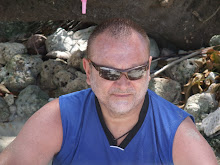


No-one who knows me would ever put their hand up and swear I was the person they knew who always wanted to be a writer. In fact i never thought about being a writer because my writing style is simply not anywhere near up to par.
So why do I have a blog then?
Well, all my life I have struggled with anxiety and panic attacks. I work hard, obsess about being a failure, and generally stress myself into a state of being very unwell.
So 54 years, plus a lot of alcohol and antidepressants later, i realized I was simply addressing, and not that well either, the symptoms.
I was never into yoga. Chanting never did it for me. Imagery, I must admit, did help. My music teachers eventually considered suicide.
But, the real shocker came when I realized that i was jealous of creative people. What was even more amazing was that these feelings of jealousy were stronger than my desires to earn more and more money and climb the corporate ladder.
So, with no other options available to me, I thought I'd give blogging a shot. Now, here's the kicker. I don't care how bad my writing is or whether or not people approve of it or not. It feels great to write. It de-stresses me. I am under no pressure to do it, I do it because I love to do it, and it makes me feel creative.
So what, you ask? Well I think that most of us are under so much pressure from so many sources that we no longer know how to be happy.
And sometimes the answer is right in front of us.
Do something you've always wanted to do. Don't do it for anyone except yourself. You might just like it. It might just make you feel happy again. There is certainly no downside to trying is there?
Wednesday, January 13, 2010


Monday, January 11, 2010
Selling your images for profit (for newbie photographers)
If you are anything like me (hopefully not!) then as a newbie photoghrapher you are spending heaps of time on the Internet exploring all the wondeful ways to go about selling your images (if not for money then certainly for the ego boost).
However, i have come to the disturbing realization that I am spending more time exploring how and where to sell my images than i am actually taking the photos in the first place!!
The reason I am writing about this crazy dilemma is that the Internet has opened up the most wonderful environment by which we can learn every minute of every day.
But eventually selling your images can only happen if you have images for sale.
So, for what it is worth, may I suggest that all us budding, newbie photographers spend most of our time taking as many shots as possible until we have a regular stream of orders for images coming in. Taking saleable images means knowing your camera inside out and practice, practice, and practice.
Eventually when we have a significantly large portfolio then we ought to spend significant time on the very important goal of actually selling our images.
Technology nowadays allows lots of people to take relatively good images with their digital cameras. But like any craft, practice does make perfect. If we think our photos look good now then imagine how good they would look if we took 500 shots a day under all sorts of lighting conditions.
The more shots we take the greater the chance of taking that "one" great one that will sell. When we have enough to sell then lets do just that. In the meantime we continue to take the 500 or more shots a day.
More photos means more "great" images. More "great" images translates to money in the bank. Yes, we need to market our "great" shots, but we have to have "great" shots to market.
However, i have come to the disturbing realization that I am spending more time exploring how and where to sell my images than i am actually taking the photos in the first place!!
The reason I am writing about this crazy dilemma is that the Internet has opened up the most wonderful environment by which we can learn every minute of every day.
But eventually selling your images can only happen if you have images for sale.
So, for what it is worth, may I suggest that all us budding, newbie photographers spend most of our time taking as many shots as possible until we have a regular stream of orders for images coming in. Taking saleable images means knowing your camera inside out and practice, practice, and practice.
Eventually when we have a significantly large portfolio then we ought to spend significant time on the very important goal of actually selling our images.
Technology nowadays allows lots of people to take relatively good images with their digital cameras. But like any craft, practice does make perfect. If we think our photos look good now then imagine how good they would look if we took 500 shots a day under all sorts of lighting conditions.
The more shots we take the greater the chance of taking that "one" great one that will sell. When we have enough to sell then lets do just that. In the meantime we continue to take the 500 or more shots a day.
More photos means more "great" images. More "great" images translates to money in the bank. Yes, we need to market our "great" shots, but we have to have "great" shots to market.
Tuesday, January 5, 2010
Happiness and the need for compromise
My wife and I have been bickering, arguing, generally not getting along for the last 2 weeks.
Embarassement prevents from admitting who, but one of us (ok, not me) decided enough was enough, apologized (not because she was wrong but because she was wise enough to understand the pride counts for very little) and explained that 14 days of pain had passed, 14 days we would never get to live again, 14 days we could have been happy and that perhaps the pain of compromise was far easier to accept and cope with than the pain of trying to see who could win.
As individuals we are proud. We want to be right. We want to be uncompromising. Why should we? I mean, aren't we important and others should dance to our tune.
Well, to put it bluntly, NO. As individuals we are not that important. Our problems, issues, concerns, in the scheme of things, are also not that important. Tomorrow a new day will start regardless of whether we are winning the war with our spouses or not or whether we feel hard done by or not.
Do not get me wrong, compromise is very difficult. We want the other person to bow to our demands (even if we do not know what they are).
But compromise is easy compared to maintaining combativeness. There is no such thing as "winning" a fight with your spouse or loved one. Words not only cause damage but, worse still, they cannot be taken back. Their damage and impact is permanent.
Life is short. Days fly by. It is simply criminal to waste them and not make every effort possible to be happy and to contribute to the happiness of those whom we love.
It does feel great to be happy. It feels even better to make others happy.
I realized that if I had put as much effort into making my wife happy during these past 2 weeks as I had into trying to show her she was wrong and I deserved an apology 2 "once in a lifetime" valuable weeks would not have been wasted.
The songwriter who penned "don't worry, be happy" was wiser than I ever gave him credit for.
Embarassement prevents from admitting who, but one of us (ok, not me) decided enough was enough, apologized (not because she was wrong but because she was wise enough to understand the pride counts for very little) and explained that 14 days of pain had passed, 14 days we would never get to live again, 14 days we could have been happy and that perhaps the pain of compromise was far easier to accept and cope with than the pain of trying to see who could win.
As individuals we are proud. We want to be right. We want to be uncompromising. Why should we? I mean, aren't we important and others should dance to our tune.
Well, to put it bluntly, NO. As individuals we are not that important. Our problems, issues, concerns, in the scheme of things, are also not that important. Tomorrow a new day will start regardless of whether we are winning the war with our spouses or not or whether we feel hard done by or not.
Do not get me wrong, compromise is very difficult. We want the other person to bow to our demands (even if we do not know what they are).
But compromise is easy compared to maintaining combativeness. There is no such thing as "winning" a fight with your spouse or loved one. Words not only cause damage but, worse still, they cannot be taken back. Their damage and impact is permanent.
Life is short. Days fly by. It is simply criminal to waste them and not make every effort possible to be happy and to contribute to the happiness of those whom we love.
It does feel great to be happy. It feels even better to make others happy.
I realized that if I had put as much effort into making my wife happy during these past 2 weeks as I had into trying to show her she was wrong and I deserved an apology 2 "once in a lifetime" valuable weeks would not have been wasted.
The songwriter who penned "don't worry, be happy" was wiser than I ever gave him credit for.
Saturday, December 19, 2009
A Newbies Guide to buying a digital camera
I have owned just about every sort of camera (from use-once throw away Kodak & Fuji film cameras to manual SLR's (wonderful beasts) to dSLR's). I've just been through the process of buying a new dSLR and it took months of research to decide on the camera I ultimately wanted to buy.
At the end of this arduous process it hit me that it ought not to be this difficult to decide which camera to buy. And then I wondered what the poor individual who was buying his or her 1st digital camera must be going through.
So after a great deal of thought it came to me that the process ought to be much simpler than we make it. So here are my thoughts about simplifying the process and minimizing the agony and decision timeframe.
I once read that the best camera in the world is the one between your ears. So, so true!
At the end of this arduous process it hit me that it ought not to be this difficult to decide which camera to buy. And then I wondered what the poor individual who was buying his or her 1st digital camera must be going through.
So after a great deal of thought it came to me that the process ought to be much simpler than we make it. So here are my thoughts about simplifying the process and minimizing the agony and decision timeframe.
- Decide on your budget
- if you do not have oodles of money to spend then this first step ought to make the process easier. I say "ought to" because even for $500 or less there are a hell of a lot of cameras to choose from.
- Decide on the primary use of the camera.
- if you are going to shoot sports and children (who tend to move a great deal when least expected or wanted), or wildlife or portraiture in a big way then you may well want to consider an entry level dSLR. The reason is that a dSLR will give you the level of manual control and options typically not available in a point and shoot camera. If you want to sell your photos or images then a dSLR or micro four thirds would be the way to go.
- Do you want your camera to be easily transportable (in your pocket for instance)? (This is a biggie because I have seen so many photographers choose to leave their hefty dSLR's behind at home and take a small pocketeable camera with them when they travel, just for the sheer convenience).
- if that is the case the small point and shoot type camera is what you need to focus on - bear in mind that a lot of small cameras nowadays have gone beyond the point and shoot mode and offer various degrees of manual control (just when you thought it was going to be easy!). Typically though the small pocketable cameras do not offer the degrees of control that are offered by dSLRs. Micro four thirds cameras are only just starting to make their mark on the world in a big way and offer the buyer the ability to purchase (albeit at a hefty cost) a smaller type camera (point and shoot size) but with the manual options of a dSLR.
- Finally, if you are dipping your toes into the world of digital photography for the first time I would suggest not buying the most complex camera, even if it is within your budget. Top end dSLR's require the equivalent of a digital camera pilot's licence to operate well. So start small, learn the basics, and move up. Even though it may not have all the manual options offered by more expensive dSLR or Micro four thirds cameras, a point and shoot in the right hands can be made to produce some awesome results.
I once read that the best camera in the world is the one between your ears. So, so true!
Friday, December 18, 2009
Want to make money from your digital images?
As photographers we each believe we know and understand art and creativity. We desperately want to be individual and to create beautiful images.
Surely then if we go to the time, effort, and trouble to apply ourselves to this task then these awesome images (and we know they are awesome because so many people tell us so) our images ought to literally "fly off the shelves" and translate into instant sales.
Unfortunately not!
The images we create are for ourselves. We create what we think is beautiful and creative. But it may not be what the buying audience wants at this point in time - certainly not in volume!
So when we are taking our photos we have to ask ourselves the reason for creating the images we do. Is it for our own pleasure? Is it because we want the buying public to recognize beauty and pay a premium to own it. Or is it to make a steady income?
If it is to make money then there we need to face up to some harsh realities.
First of all, nowadays, with the advent of digital technology and the poficiency of its use, many people create beautiful images. In fact the web is littered with gorgeous, creative images. With so many around the biggest challenge would be choosing which one to purchase.
So what does that mean to me as a photographer? What that means is that if you find exactly the right buyer at the right time who is looking just for just the sort of images you produce you'll probably make a "one off" sale one in a while.
However if you want to make real and regular money, your "one off" (unless a buyer is prepared to pay thousands of dollars for an image - which is still not a lot if you only sell only one or two images a year) won't cut it. You need to sell volume.
Selling volume is a whole new ballpark. Because now the focus shifts away from you (what you want to create) and to the buyer (what he is looking for).
Sales is always about giving the buyer what he wants. A professional salesperson with only one product will sell that product differently to different buyers based on what benefits each individual buyer is seeking from the salesperson's product.
The same reasoning applies to digital images. Putting up for sale what YOU think is saleable because YOU like it will not make you money. Putting up for sale what you know the BUYER is looking for will make you money.
So the trick is to get back to the basics of selling - research your customer. Spend time on the Internet (Flickr, Microsites, Stock Agencies, Twitter, MySpace, etc) and learn as much as you can about what sort of images buyers are looking for. Get in touch with financially successful photographers and find out what they are selling, to whom, and how.
So other than some homework what is the downside? Well, the downside is that if you want to make money, and not focus on creating your interpretation of art, you need to shoot what the buyer wants you to shoot (his or her interpreattion of art).
Sales is about the buyer and not the seller. The seller needs to identify the buyers needs and direct his efforts at fulfilling those needs. This translates into sales which translate into dollars.
Surely then if we go to the time, effort, and trouble to apply ourselves to this task then these awesome images (and we know they are awesome because so many people tell us so) our images ought to literally "fly off the shelves" and translate into instant sales.
Unfortunately not!
The images we create are for ourselves. We create what we think is beautiful and creative. But it may not be what the buying audience wants at this point in time - certainly not in volume!
So when we are taking our photos we have to ask ourselves the reason for creating the images we do. Is it for our own pleasure? Is it because we want the buying public to recognize beauty and pay a premium to own it. Or is it to make a steady income?
If it is to make money then there we need to face up to some harsh realities.
First of all, nowadays, with the advent of digital technology and the poficiency of its use, many people create beautiful images. In fact the web is littered with gorgeous, creative images. With so many around the biggest challenge would be choosing which one to purchase.
So what does that mean to me as a photographer? What that means is that if you find exactly the right buyer at the right time who is looking just for just the sort of images you produce you'll probably make a "one off" sale one in a while.
However if you want to make real and regular money, your "one off" (unless a buyer is prepared to pay thousands of dollars for an image - which is still not a lot if you only sell only one or two images a year) won't cut it. You need to sell volume.
Selling volume is a whole new ballpark. Because now the focus shifts away from you (what you want to create) and to the buyer (what he is looking for).
Sales is always about giving the buyer what he wants. A professional salesperson with only one product will sell that product differently to different buyers based on what benefits each individual buyer is seeking from the salesperson's product.
The same reasoning applies to digital images. Putting up for sale what YOU think is saleable because YOU like it will not make you money. Putting up for sale what you know the BUYER is looking for will make you money.
So the trick is to get back to the basics of selling - research your customer. Spend time on the Internet (Flickr, Microsites, Stock Agencies, Twitter, MySpace, etc) and learn as much as you can about what sort of images buyers are looking for. Get in touch with financially successful photographers and find out what they are selling, to whom, and how.
So other than some homework what is the downside? Well, the downside is that if you want to make money, and not focus on creating your interpretation of art, you need to shoot what the buyer wants you to shoot (his or her interpreattion of art).
Sales is about the buyer and not the seller. The seller needs to identify the buyers needs and direct his efforts at fulfilling those needs. This translates into sales which translate into dollars.
Thursday, December 17, 2009
Farming - stress therapy at its best
Four years ago my wife and I bought our first farm in the Philippines.
Since then we have expanded to approximately 30 hectares of land where we grow coconuts, bananas, and a wide variety of tropical fruits. We also keep bees from which we harvest honey. We breed very large New Zealand goats and we also have a chicken farm.
The next project will involve the conversion of 50 heactares of rice fields into Tilapia fish ponds.
This all started as a pet project to do something different from our normal roles of Country Manager Saudi for a technology/consulting firm (me) and dentistry (my wife).
We soon realized that we loved what we were doing. First of all we loved it because it was apparent to us that the world is fast running out of food and that a) there is good money to be made in smart, targetted farming (important because we still have the reality of raising a child and putting her through school), and b) it gave us an opportunity to provide food at very reasonable prices to those in the Philippines who could not afford good quality nutritious food.
But the real kicker was that although we worked very, very hard we both discovered that farming was a major stress reliever from our "real" jobs. Yes, there was the physical aspect of it. But more importantly we felt that finally we were doing something that mattered. We were dealing with Mother Earth and we were giving back. Our lives were no longer just about money.
The world is changing. The financial crisis we are living through has shown us that none of our "real" jobs are safe any longer.
Maybe this is a good time to re-evaluate how we can make money and also help others and in the process find happiness, peace and contentment.
Since then we have expanded to approximately 30 hectares of land where we grow coconuts, bananas, and a wide variety of tropical fruits. We also keep bees from which we harvest honey. We breed very large New Zealand goats and we also have a chicken farm.
The next project will involve the conversion of 50 heactares of rice fields into Tilapia fish ponds.
This all started as a pet project to do something different from our normal roles of Country Manager Saudi for a technology/consulting firm (me) and dentistry (my wife).
We soon realized that we loved what we were doing. First of all we loved it because it was apparent to us that the world is fast running out of food and that a) there is good money to be made in smart, targetted farming (important because we still have the reality of raising a child and putting her through school), and b) it gave us an opportunity to provide food at very reasonable prices to those in the Philippines who could not afford good quality nutritious food.
But the real kicker was that although we worked very, very hard we both discovered that farming was a major stress reliever from our "real" jobs. Yes, there was the physical aspect of it. But more importantly we felt that finally we were doing something that mattered. We were dealing with Mother Earth and we were giving back. Our lives were no longer just about money.
The world is changing. The financial crisis we are living through has shown us that none of our "real" jobs are safe any longer.
Maybe this is a good time to re-evaluate how we can make money and also help others and in the process find happiness, peace and contentment.
Wednesday, December 16, 2009
Fatherhood...our responsibilities to our kids
I became a dad at age 52 - it was not planned!
My wife and I loved our freedom, our ability to go anywhere, anytime, no baggage.
Then along came Zara.
I do not care what anyone says about the negatives of rearing a child. In my mind, nothing, but nothing, beats the feeling you experience when your child looks up at you and smiles, or when your child holds your hand whilst watching TV, or when she falls asleep on your chest.
I cannot understand how human beings could ever harm a child let alone ignore the plight of children around the world who are without parents, food, medicines, shelter, or safety.
It is our responsibility as members of Group Earth to take care of all children in the world. They are innocent and look to us for protection, education, and guidance.
I love my daughter. But my wife and I are committed to helping children whenever and wherever we can. We do not do this because we are bleeding heart, donation seeking goodie goodies. We do it because we believe that it is the responsibility of all adults on this planet to look after the generation that follows us.
We brought them into the world, it is our duty to care for them (whether they are ours biologically or not).
Look into a child's face. You see the face of an innocent human who sees the world without bias, greed, or any form of agenda. Children simply want to be happy. They have a lot to teach us.
Maybe by helping our children and those less fortunate than our own we can find the meaning in our own lives that often eludes us.
My wife and I loved our freedom, our ability to go anywhere, anytime, no baggage.
Then along came Zara.
I do not care what anyone says about the negatives of rearing a child. In my mind, nothing, but nothing, beats the feeling you experience when your child looks up at you and smiles, or when your child holds your hand whilst watching TV, or when she falls asleep on your chest.
I cannot understand how human beings could ever harm a child let alone ignore the plight of children around the world who are without parents, food, medicines, shelter, or safety.
It is our responsibility as members of Group Earth to take care of all children in the world. They are innocent and look to us for protection, education, and guidance.
I love my daughter. But my wife and I are committed to helping children whenever and wherever we can. We do not do this because we are bleeding heart, donation seeking goodie goodies. We do it because we believe that it is the responsibility of all adults on this planet to look after the generation that follows us.
We brought them into the world, it is our duty to care for them (whether they are ours biologically or not).
Look into a child's face. You see the face of an innocent human who sees the world without bias, greed, or any form of agenda. Children simply want to be happy. They have a lot to teach us.
Maybe by helping our children and those less fortunate than our own we can find the meaning in our own lives that often eludes us.
Motivation
It is just so easy to put off to tomorrow, or the next day, or the next month...
Problem is that in the back of your head there is that little bit of guilt about not having done something, as well as the anxiety associated with knowing that there is an unfinished item on your TO DO list.
So just do it! It feels bloody great to tick off an item as "done".
Sometimes I would rather lay in front of the TV than write in this blog.
But I committed to myself that I would write everyday. So even though I am not in the mood sometimes and I really just do not want to write I "force" myself to do it. Now here's the real clincher: it feels soooo good when you've done it. Not just because it is "out of the way" but because by doing it you realize why you decided to do it in the first place...you simply like doing it.
We get easily distracted. It takes no effort to be lazy and do nothing. And one day you wake up and 20 years have passed and you are still doing nothing.
Even the things you love take an effort to do sometimes. It doesn't mean we like them any less, simply that we are human.
Live life, do what needs to be done, and do it now - putting it off will only make you miserable and deprive you of the joy of having done something you love to do.
Life is too short to let laziness win.
Problem is that in the back of your head there is that little bit of guilt about not having done something, as well as the anxiety associated with knowing that there is an unfinished item on your TO DO list.
So just do it! It feels bloody great to tick off an item as "done".
Sometimes I would rather lay in front of the TV than write in this blog.
But I committed to myself that I would write everyday. So even though I am not in the mood sometimes and I really just do not want to write I "force" myself to do it. Now here's the real clincher: it feels soooo good when you've done it. Not just because it is "out of the way" but because by doing it you realize why you decided to do it in the first place...you simply like doing it.
We get easily distracted. It takes no effort to be lazy and do nothing. And one day you wake up and 20 years have passed and you are still doing nothing.
Even the things you love take an effort to do sometimes. It doesn't mean we like them any less, simply that we are human.
Live life, do what needs to be done, and do it now - putting it off will only make you miserable and deprive you of the joy of having done something you love to do.
Life is too short to let laziness win.
Monday, December 14, 2009
Selling when you don't think you are selling...
Whether it is correct practice or not people inevitably ask you what you do for a living and who you work for.
As of that moment, whether you are in a social or work environment, you and your company are being judged by your actions. As of that moment you are selling yourself and your company (and by inference, your company's products and reputation).
Now you may argue that this is not fair, not right, and it doesn't happen. Well i hate to shock you but it doesn't matter whether it is fair or right, and it does happen!
But no-one at the gathering has anything or will ever have anything to do with my company. Mmmmmm....maybe.
But after 54 years on planet earth I never fail to be shocked and surprised when I learn that "a" knows "b", who knows "c", who happens to be someone you end up presenting your product to 6 months down the track - what a bummer if you acted like an idiot in front of "a".
So whether you know it, like it, or simply refuse to accept it, you are always selling. Even if "it never happens", what have you lost? You've simply acted "on your best behavior" (there, no use of the "sales" word).
Being forewarned is being forearmed...or, better to be safe than sorry.
As of that moment, whether you are in a social or work environment, you and your company are being judged by your actions. As of that moment you are selling yourself and your company (and by inference, your company's products and reputation).
Now you may argue that this is not fair, not right, and it doesn't happen. Well i hate to shock you but it doesn't matter whether it is fair or right, and it does happen!
But no-one at the gathering has anything or will ever have anything to do with my company. Mmmmmm....maybe.
But after 54 years on planet earth I never fail to be shocked and surprised when I learn that "a" knows "b", who knows "c", who happens to be someone you end up presenting your product to 6 months down the track - what a bummer if you acted like an idiot in front of "a".
So whether you know it, like it, or simply refuse to accept it, you are always selling. Even if "it never happens", what have you lost? You've simply acted "on your best behavior" (there, no use of the "sales" word).
Being forewarned is being forearmed...or, better to be safe than sorry.
Sunday, December 13, 2009
a change in attitude is better than taking pills
I wrote in an earlier blog about my epiphany - the "light bulb" moment that changed my life.
Reflecting on that event I have come to a number of conclusions:
There is no downside, only upside.
It beats wasting time in front of the TV.
And it feels great to feel great.
Reflecting on that event I have come to a number of conclusions:
- being positive made me feel better about myself
- feeling better about myself got me to start exercising and feeling healthier
- i started performing better at work
- i took up hobbies that I had been putting off, ignoring, not doing anything about: photography, blogging, writing, starting my own businesses
- this made me feel even better about myself
- which made me see the world in a different, less dark, light
- which in turn made me happy
There is no downside, only upside.
It beats wasting time in front of the TV.
And it feels great to feel great.
Subscribe to:
Posts (Atom)
